 Spain

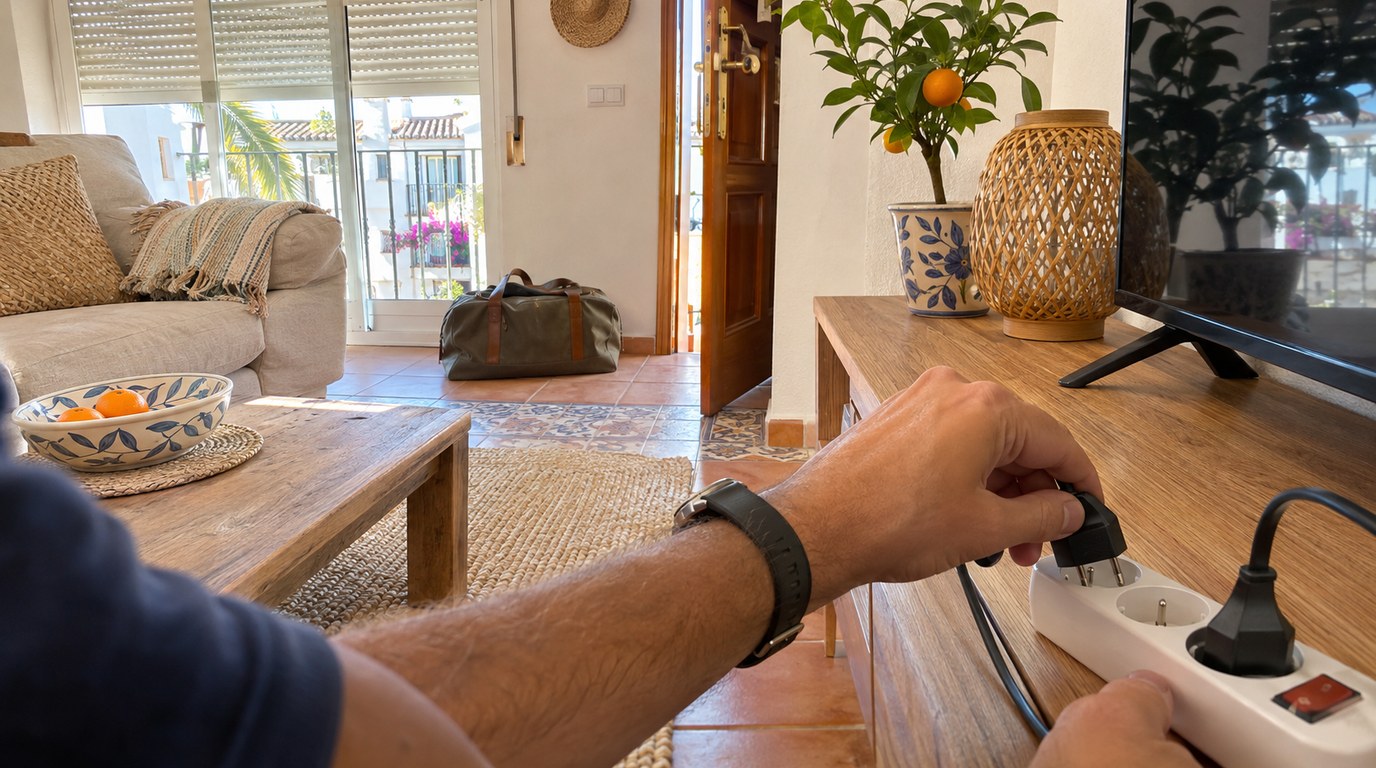
An empty holiday home can still produce an electricity bill.
You still pay fixed charges while the supply stays active. Your alarm, fridge, router, or humidity control may also use power.
The best saving usually comes from matching the contract to how you use the home.
- Check the fixed part first. Contracted power can matter more when the home uses little energy.
- Keep only essential devices running. Switch off unused equipment at the plug before you leave.
- Think carefully before cancelling the supply. A new connection later has costs and takes planning.
Start with your last 12 months of bills. Compare the yearly cost before changing power or tariff.
Why you still pay Check your power Before you leave Keep or cancel
Why an empty home still gets electricity bills
A Spanish electricity bill has fixed and variable parts.
The energy part depends on how many kilowatt-hours you use. The power part depends on your contracted capacity.
You can therefore receive a bill with little or no energy use.
The bill may also include meter rental and taxes. The exact lines depend on your contract and equipment.
Our Spanish electricity bill guide explains each section.
Check your contracted power
Contracted power is the maximum capacity reserved for your home. Spanish bills show it in kilowatts.
Domestic low-voltage supplies with up to 15 kW use the 2.0TD access tariff.
The tariff has 2 power periods. You can contract a different power level for each period.
Lower power can reduce the fixed part of your bill. It must still cover the devices you use together.
Do not copy the level from another property. Air conditioning, water heating, cooking, and pool equipment can change your needs.
Your distributor's online area may show your highest recorded demand. Recent bills may also include this information.
Our contracted power guide explains how to check it.
Do not reduce power for one empty month
Reducing power has a regulated connection charge. Raising it later can cost more.
Higher power may require access or extension rights. The cost depends on the increase and your supply point.
Compare a full year's saving with the cost of changing it twice.
Choose a tariff for occasional use
A cheap energy price does not always mean a cheap holiday-home contract.
Low-use homes need a close look at fixed charges. Also check paid maintenance services and short discount periods.
Some free-market plans use one price all day. Others use time bands or an indexed price.
The regulated PVPC tariff changes each hour. Your best option depends on when you use the home.
Use the same yearly consumption and power figures for every comparison.
Check the price after any discount ends. Read the commitment and cancellation terms before you sign.
See our Spanish electricity provider comparison for the main options.
What to switch off before you leave
Walk through the home room by room. Unplug equipment that does not need power.
- Switch off televisions, speakers, chargers, and coffee machines at the plug.
- Empty and clean the fridge before switching it off.
- Leave the router on only if alarms or smart devices need it.
- Check pool pumps, water heaters, and air conditioning timers.
- Keep essential security and moisture-control equipment powered.
Do not switch off the main breaker without checking every connected system.
A monitored alarm may need mains power and internet. A fridge or pump may also protect the property.
Follow the maker's instructions for each appliance. Ask your alarm or maintenance company when unsure.
Watch the empty-home pattern
Take a meter reading when you leave. Check another reading during the empty period.
A smart meter can make this easier. Your distributor may show daily or hourly consumption online.
Unexpected use can come from a fridge, pump, water heater, alarm, router, or faulty appliance.
Start with the equipment that runs automatically. Do not open or alter the meter.
Should you cancel the electricity supply?
Cancelling the supply removes ongoing electricity bills. It also creates work and costs when you reconnect.
The CNMC says a new activation is needed after cancellation. You must pay the relevant activation charges again.
A supplier may also charge a contract penalty when a valid commitment period applies.
Keeping the supply is usually simpler for seasonal use. Cancellation may suit a property empty for a long time.
Ask for a written cost before cancelling. Check the expected reconnection time before your next stay.
A simple yearly check
- Collect 12 months of electricity bills.
- Add the full amount paid, including services and taxes.
- Check your highest demand and current contracted power.
- List the devices that must stay on while you are away.
- Compare tariffs using the same yearly figures.
- Review the first full bill after any change.
This gives you a fair comparison across occupied and empty months.
FAQ
Why is my Spanish electricity bill high when the home is empty?
You still pay fixed charges while the supply stays active. Some devices may also keep using electricity.
Can I lower contracted power for a holiday home?
Yes. First check your highest demand and the appliances used together.
Include the cost of reducing power and raising it again.
Should I switch off the main breaker?
Only after checking every system. Alarms, routers, fridges, pumps, and moisture control may need power.
Is cancelling the supply cheaper?
It removes ongoing bills. Reconnection requires a new activation and related charges.
Compare electricity plans in English
Settlewell can compare electricity plans for your Spanish home. We explain the fixed costs and contract terms in English.
Start your electricity comparison with Settlewell.
Sources
- BOE, CNMC Circular 3/2020, consolidated text. Published 24 January 2020. Updated 5 February 2025. Accessed 16 November 2026.
- CNMC, guide to the 2.0TD electricity bill. Published 2021. Accessed 16 November 2026.
- CNMC, electricity supply and contract guidance. Accessed 16 November 2026.
- CNMC, how to change electricity contract conditions. Accessed 16 November 2026.
- IDAE, home energy-saving guidance. Accessed 16 November 2026.