How the Spanish healthcare system works
 Spain
Spain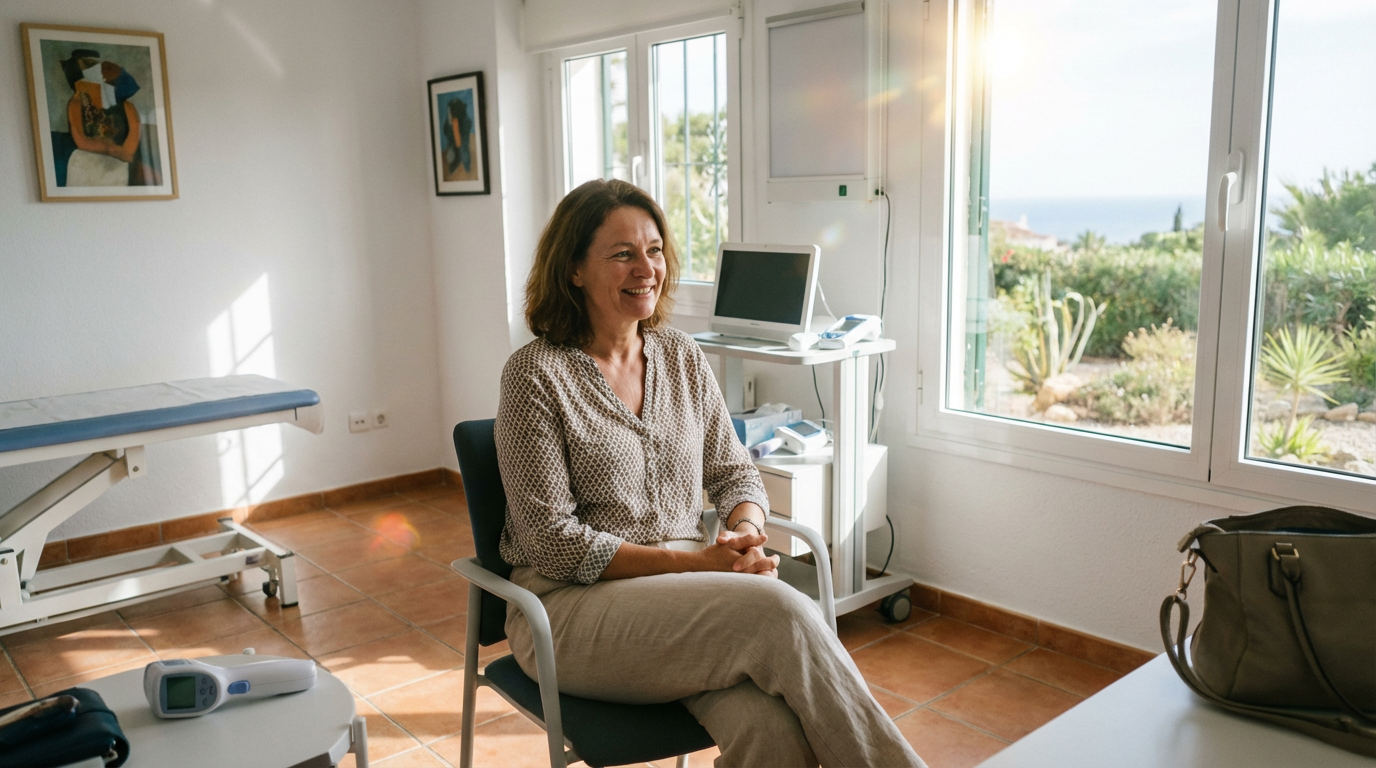
Moving to Spain changes your daily rhythm—and how you use healthcare. The good news: Spain’s system is generous, organized, and familiar once you learn a few local terms. This guide explains how it works for expats.
In Short
You start at your local health center and get referrals to specialists. Coverage comes through work, an S1, or the Convenio Especial buy-in. Public care is strong; many add private insurance for faster access or English-speaking doctors. Prescriptions use co-pays; adult dental is limited.
How the system works (and why it feels different)
Spain’s public system is the SNS (Sistema Nacional de Salud). It’s national in design and run by the regions day to day. Each autonomous community manages its own hospitals, clinics, and apps. You enter care through primary care at your local centro de salud (health center). Your médico de cabecera (family doctor) is your first contact and the person who refers you to specialists. Referrals are the norm. That keeps care coordinated and wait lists fair.
Because regions run services, waiting times and admin vary. One region might have a slick app and a digital health card; another may still prefer paper for some requests. The benefit package is similar nationwide, so once you learn the basics, you’ll be able to navigate anywhere.
Who can use public healthcare?
If you work or are self-employed in Spain and pay into Seguridad Social, you’re covered. Your dependents can be added too. EU/EEA and Swiss residents usually connect through Social Security as well. Visitors from those countries use EHIC/GHIC for medically necessary public care during temporary stays.
Retirees from the UK living in Spain can receive healthcare funding from the UK. They can access the Spanish National Health System (SNS) just like local residents. Non-EU long-stay residents usually start with private insurance to meet visa rules, then move to public coverage once they begin contributing to Social Security. Students and digital nomads depend on their residence type and whether they pay in Spain. The pattern is simple: contributing or holding an exportable entitlement opens the door.
The “buy-in” option: Convenio Especial
Not working yet and no S1? The Convenio Especial is a public buy-in. You pay a monthly fee for access to your region’s public care. Reference amounts are widely quoted as €60/month if under the age of 65 and €157/month if 65 and above. Most regions ask for 12 months of residence and a current empadronamiento (local address registration). One exception to note: under the Convenio, prescription drugs aren’t subsidized, so you pay retail at the pharmacy. For many early retirees, it remains steady and good-value coverage.
Getting “on file” without stress
To look local to the system, Spain requires the usual anchors: your NIE/TIE (foreigner ID/residence card), padrón (town hall address registration), and a Social Security number if you’ll be contributing. With your entitlement recognized (work, S1, or Convenio Especial), you choose a centro de salud and receive your Tarjeta Sanitaria (health card). From there, your family doctor becomes your guide; prescriptions are electronic, and most administrative tasks occur at the desk or online. It’s familiar—just in Spanish.
What’s covered (and what isn’t)
| Covered: | Prescriptions: | Limited: |
|---|---|---|
| … family doctor and nurse care, specialists (via referral), diagnostics, hospital and emergency care. Mental health includes psychiatry; access to public psychologists exists, but it often involves a waiting list and clinical criteria. | … subsidized with co-pays based on income and status. Pensioners pay a smaller share with monthly caps. Many chronic medications sit at 10% with limits—one reason long-term treatment is manageable. | …adult dental and vision. Emergency dentistry is covered; children and certain priority groups get additional dental benefits. Many adults use private dental and pay routine optical costs out of pocket or via add-ons. |
Honest note: Spain’s public system is thorough, but non-urgent specialist care can involve waiting. That’s normal in a coordinated, referral-based model.
Why do many expats still add private coverage?
Public care is strong. Private insurance adds speed, choice and often access to English-speaking doctors. It helps when you want a second opinion or a scan next week instead of next month. Typical premiums start around €100–€ 200 per month, depending on age, region, and additional extras. Visa-grade plans tend to be no-copay and unlimited; everyday plans may offer lower premiums in exchange for small co-pays.
Many residents keep both: public for breadth and subsidized medicines; private for shorter waits and comfort. Think of it as two doors into the same house—use whichever gets you to the care you need, when you need it.
Costs made simple
A notable shortcoming is that the co-pay bands and caps are national. Still, billing nuances can vary from region to region. Your regional portal will spell out your band and caps. |
Seniors, screenings, and long-term support
Your family doctor keeps you on schedule for screenings and vaccinations (flu annually; others by age and region). If daily living becomes harder, Spain’s long-term care system (SAAD) offers in-home assistance, day centers, residential care, tele-assistance, and cash benefits. Access is based on a dependency assessment by your region and may involve means-tested co-payments and waits. Start early with your local Centro de Salud and social services. Rehabilitation and palliative care are integral to public pathways, which are coordinated by your clinicians.
Families, maternity, and children’s care
Maternity care runs smoothly in the public system, from prenatal to postnatal care. Pediatric services are available at the Centro de Salud, and the national child vaccination calendar is distributed locally. Some regions fund extra vaccines or boosters. Children’s dental programs are stronger than adults’ in many areas—your regional site will show what’s included where you live.
Emergencies and urgent care
For urgent, serious issues, dial 112 anywhere in Spain (EU-wide). In many regions, 061 also reaches medical emergencies. For problems that can’t wait until morning, go to the Urgencias (Emergency Department) at a hospital or the after-hours unit linked to primary care. Bring your Tarjeta Sanitaria or private health insurance card. Keep a short list of medications and allergies on paper and on your phone (in both Spanish and English). It speeds up care.
Pharmacies and prescriptions
Look for the green cross. With receta electrónica (e-prescription), your doctor updates your medication plan and any pharmacy in Spain can dispense it with your health card. After-hours pharmacies rotate as Farmacia de Guardia; schedules are posted on doors and city sites. Generics are common. Prices are clear. Refills are quick.
Language, booking, and everyday comfort
Large cities and private clinics offer more English. In public clinics, bring a simple phrase sheet and a printed list of medications. Booking usually happens in your region’s app or portal under “cita previa.” Private insurers also provide booking apps and nurse lines. Keep a digital folder with scans of your ID, health card, and recent prescriptions. It saves time at reception and makes renewals painless.
Light tip: Spain still loves a stamped sheet. Bring a slim paper folder for the day’s errands—even if you also have the PDFs.
Digital health and regional portals
Regions offer apps and portals for scheduling appointments, viewing results, accessing imaging reports, and managing e-prescriptions. Some offer a virtual health card. Because platforms are regional, the look and feel change—but the core tools are similar. If you move to a new province, expect to re-register and select a new Centro de Salud near your new home.
What varies by region (and how to stay oriented)
Administrative steps, wait times, and a few additional details differ. One community might expand dental benefits for kids; another might roll out seasonal vaccines earlier. Your best source is your regional health service website. It lists local rules, appointment links, and forms. If you prefer the phone, your Centro de salud receptionist can point you to the exact page you need.
The short version
If you work or hold an entitlement (S1 or Convenio), you can use Spain’s public system: GPs, specialists, hospitals, emergencies, and subsidized prescriptions with fair co-pays. Adult dental and optical healthcare is limited; consider private options if they are a concern for you. Many expats keep public and private for the best of both worlds. Your path is simple: get on file, learn the key words, and let your médico de cabecera guide you. After that, Spanish healthcare feels like Spanish life—calm, humane, and built for everyday needs.
Takeaways
|
Settlewell can help
You can find the right healthcare provider through our platform. Just register and compare your options in the healthcare section.
Built by people who’ve moved abroad
Our team at Settlewell lives abroad - we know how challenging it can be to navigate the bureaucracy and service market in a new country. We’ve made it as easy as back home.

Questions? Answers.
Still have questions?
We use cookies to enhance your browsing experience, analyze site traffic, and personalize content. By clicking "Accept", you consent to our use of cookies. You can manage your preferences at any time.