
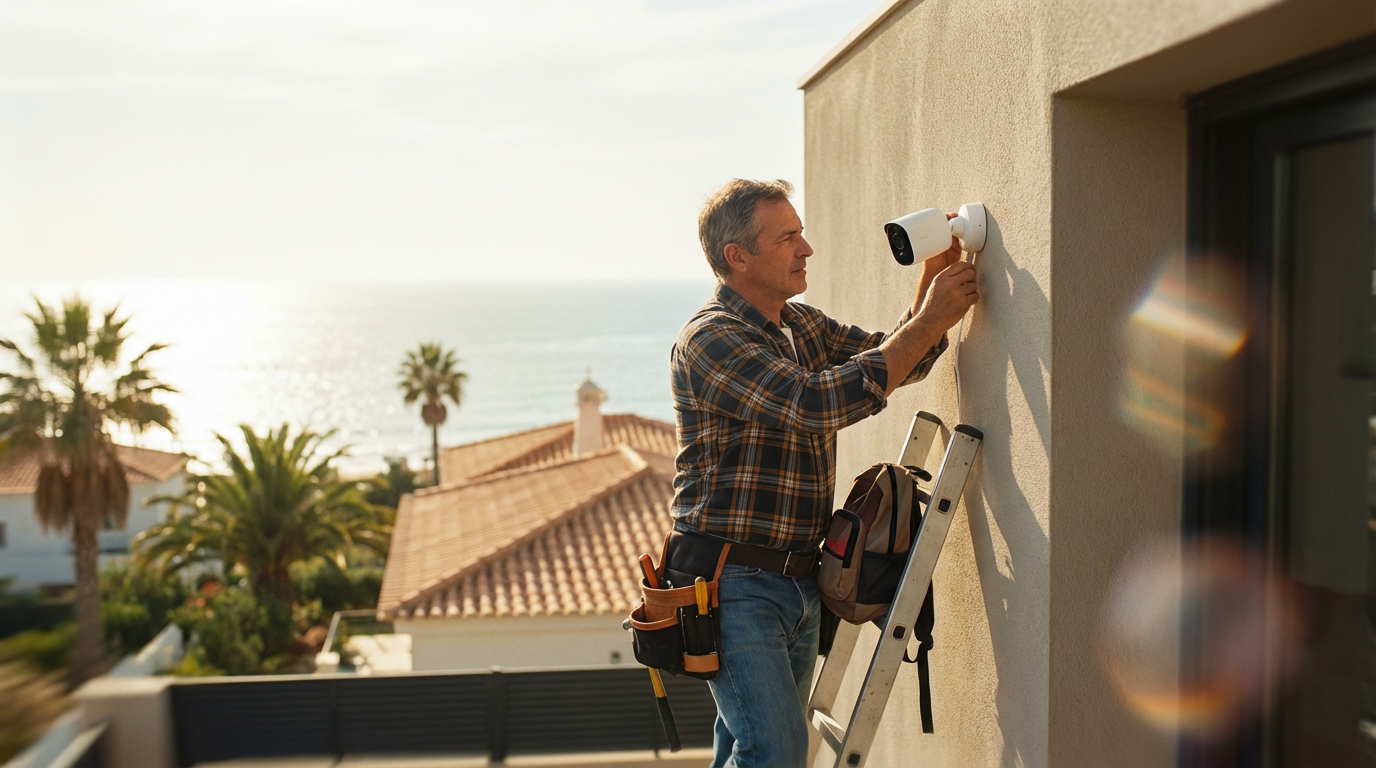
Feeling at home starts with feeling safe. Portugal is welcoming, and most days are uneventful. Still, an empty flat, a side gate left ajar, or a holiday home that sits alone for weeks can invite trouble. This guide explains how systems work in Portugal, who benefits most, what modern alarms and cameras actually do, and when simple upgrades are enough.
How home security works here
Most Portuguese providers offer two clear paths. A professionally monitored alarm connects your home to a 24/7 control center that checks alerts and calls you (and, when needed, emergency services). A self-monitored setup sends alerts to your phone, allowing you to decide what to do next. Both rely on wireless door/window sensors, indoor motion detectors, and a loud siren. Newer kits use your home internet and keep a mobile data backup, so alerts still go out during an outage.
In apartment buildings, you also benefit from the porteiro (doorman) in some condomínios, an entry intercom, and a locked lobby. Houses and townhouses tend to focus more on the perimeter, including side gates, garden paths, and terrace doors.
Who benefits most
Security brings the biggest lift to ground-floor or first-floor apartments, detached homes with easy garden access, and second homes in coastal or rural areas that sit empty between visits. It’s also helpful for frequent travelers and night-shift workers. If you keep jewelry, high-end bikes, instruments, or camera gear at home, pairing a proper lock with an alarm is simple risk control.
Renters vs owners
| Renters want gear that doesn’t leave marks and can be easily moved with them. Wireless sensors, a smart lock that reuses the existing cylinder, and adhesive camera mounts fit well. Always tell your landlord before drilling, then leave a short “what’s installed” note when you go. | Owners can invest in the structure by installing a reinforced door, a certified cylinder, window latches, outdoor lighting, and a small safe bolted to concrete or a solid wall. |
Apartment, townhouse, or detached house
Apartments rely on multiple layers: the building door, elevator or stairs, your front door, and then sensors inside. A solid door and quality cylinder do most of the work here.
Townhouses and detached homes face perimeter risk. Light the side paths, trim the shrubs near windows, and install contact sensors on the terrace and garage doors. If you store e-bikes, use a ground anchor plus a sensor inside the garage.
What a modern system includes
You’ll see the same core pieces across brands:
- A hub near your router
- Entry sensors on doors and windows
- Motion detectors in key rooms
- A keypad or phone app to arm and disarm
- Battery and mobile backup, so alerts still fire during cuts
- Extras that help in real life: a panic button, smoke/CO detectors, and water-leak sensors near boilers and sinks
Cameras are optional. If you add them, keep indoor units for private rooms and consider a video doorbell for deliveries and quick checks.
Monitored or self-monitored?
| Monitored suits second homes and anyone who wants a human to triage alerts at 03:00. The control center verifies signals and calls you, your contact, or emergency services as needed. | Self-monitored is cheaper over time and works if you’re often nearby. Your phone pings, you check the clip, you decide. Many households start self-monitoring and upgrade to monitoring when travel increases. |
Privacy and being a good neighbor
Keep cameras inside your boundary. Don’t point them at public walkways or a neighbor’s terrace. Post a simple “video in use” notice if you record, lock your app with two-factor login, and limit how long you store footage. Inside the home, tell guests if a camera is active—or switch it off when people visit. Safe and polite can be the same choice.
Locks, doors, and simple upgrades that matter
The biggest wins are basic:
- Fit a reinforced door or upgrade to an anti-bump, anti-snap cylinder
- Add a viewer or smart peephole
- Use latches on tilt-and-turn windows and a bar or pin on sliding doors
- Put timers on a few lights when you’re away
- Label a spare key without your address
- Photograph valuables and note serial numbers
These steps close many gaps before you buy anything “smart.”
Contracts, visits, and what buying feels like
A provider will map entry points and suggest a kit. Installations are usually quick. Ask direct questions: contract length, what’s included, who owns the equipment, how the response works, and how to move the system to a new address. Avoid long lock-ins unless the value is evident. Before the installer leaves, test the siren and walk through an alert from the sensor to the phone.
Tying security to home insurance
Insurers care about doors, locks, and proof of ownership. Some offer small discounts for certified alarms or safes. More importantly, evidence supports claims, including clear photos, a police report in the event of theft, and alarm logs. If your provider issues a certificate, store it with your policy and note any maintenance checks they require.
When less is enough
You don’t always need a full kit. In a high-floor flat with a porter, a strong door, and few valuables, hardware upgrades, plus a door sensor and siren, may be enough for a long holiday let with minimal belongings. This can be achieved by using timers, good locks, and a trusted neighbor holding a spare key. Add cameras or monitoring later if your routine changes.
Summary
Home security in Portugal is practical and flexible. Start with a solid door and cylinder. Add sensors where they count. Choose monitoring only if you want a control center watching while you’re away. Apartments thrive on layers; houses protect the perimeter. Renters keep it no-drill; owners can build in. Maintain privacy, contracts, and habits in order. Start small and add pieces as your life in Portugal settles.
Takeaways
|
Settlewell can help
We help you find the right deal for you. Just go to the Home Security section in our app and complete the short form. We will connect you with a licensed security provider in Portugal who will design a setup for your home and install it without hassle—no hidden fees, and in English. Fill out your form now and find the right provider today!