What is an eSIM and why it's great for Expats
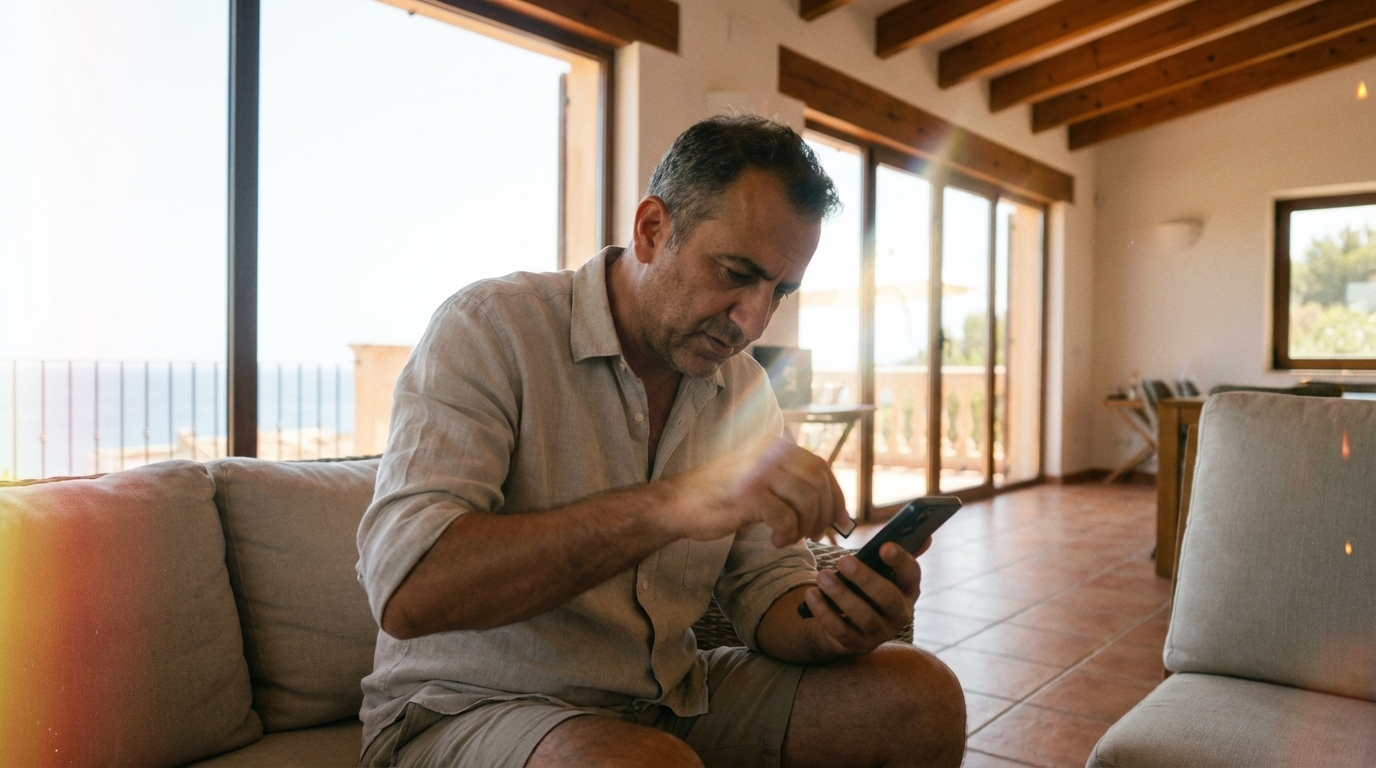
An eSIM is a digital SIM. It replaces the little plastic card with a secure profile you download to your phone. You scan a code, your plan activates, and your number works. For expats, that means a couple of benefits. This guide walks you through all the benefits, requirements and answers if you really need an eSIM.
In short
eSIM gives you a local number in minutes—without a plastic card. You can keep two lines on one phone and move plans between devices quickly. Buy online or in-store, then activate over Wi-Fi with a QR code. Save the activation code in a safe place.
What an eSIM is
A classic SIM is a chip in a card. An eSIM is essentially the same concept, but built directly into your phone. Your provider sends a QR code, which you need to scan. The phone saves an encrypted profile that identifies you to the network. You can store multiple profiles and select the one that is active.
This is safe and standard. Most recent iPhones, Google Pixels, and high-end Android models support eSIM. Mid-range phones increasingly do too. If you're unsure, check your phone settings for "Add eSIM" or "Cellular plans."
Why eSIMs make expat life easier
Moving to a new country is full of small waits. An eSIM removes several. You can get a local number before you land or on day one, right from the comfort of your own sofa. You can keep your old number active for a few weeks while friends and services update their contact details to your new number. If a plan disappoints, you can switch providers without having to wait for a new card to arrive.
It also helps with admin. Many banks, health portals, and delivery apps send codes to a local number. With eSIM, you can set up that number in minutes. You can then move it to a new phone just as quickly if your device changes.
How eSIM works in daily life
Once installed, an eSIM behaves like any mobile plan. Calls, texts, data, tethering—everything works as usual. If your phone supports dual lines, you can run two phone numbers at once. For example, a Spanish line for calls and data, while having a home-country line for banking codes or family. You choose which line handles data by default and which one rings.
Travel gets simpler, too. You can add a short-term travel eSIM for another country without touching your Spanish plan. When you return, you turn the travel profile off. No plastic. No risk of losing the main SIM.
Getting an eSIM
You can buy an eSIM online or in a shop. Online is the fastest. You upload your ID, choose a plan, and receive a QR code via email or through the provider's app. In a shop, staff will check your ID and print a QR on the spot. Activation usually takes a few minutes.
Most providers offer prepaid eSIMs and contract eSIMs. Prepaid is good for the first month while you settle in. Contract offers better long-term value once you have your address and IBAN ready. You keep the same number when you switch from a prepaid plan to a contract with the same provider.
Activation, step by step
Keep the QR or activation code in a safe place. If you change phones later, you might need a new QR from the provider for security reasons. They can issue it quickly. |
How much data do you need?
Most people do well with 30–80 GB per month. That covers maps, messaging, video calls, and streaming on the go. If you hotspot a laptop, you may want 100 GB or an "unlimited" plan with a fair-use cap. 5G is widely available in cities and larger towns. It helps with crowded places and big downloads. Good 4G is still enough for daily use.
Roaming, EU rules, and calling abroad
Within the EU/EEA, many Spanish plans include roam-like-at-home with a fair-use limit. Outside the EU, costs rise quickly. If you travel often to a non-EU country, consider a travel eSIM for that region. For international calls from Spain, check whether your plan includes minutes or buy a small add-on. You can always call over apps when on Wi-Fi.
Number porting and keeping what you have
Do you already have a local number with another provider? Ask for portability when you buy your eSIM. Your new provider will move the number for you. The service continues to work until the moment of the switch.
Security, loss, and recovery
Treat eSIM like any mobile plan. Turn on two-factor authentication for your bank and other important apps. If your phone is lost or stolen, use "Find My" (iOS) or Android's device manager to lock or erase it. Contact your provider to suspend the line and request a new eSIM. With eSIM, you can often restore service faster because there is no card to ship.
Costs and small print that matter
Ask for the final monthly price after any promotion has been applied. Check if there is a minimum term or device tie-in. Confirm the EU roaming limits, hotspot allowance, and fair-use terms if the plan states "unlimited." If you plan to keep two lines active, ensure your phone supports either dual eSIM or eSIM and a physical SIM.
When you might not need an eSIM
If you frequently change phones and your current model does not support eSIM, a traditional SIM card is a suitable option for now. If you are in Spain for a very short visit and your home provider offers cheap roaming, you can wait. If you prefer a plan that includes a subsidized phone and your provider only issues it with a physical SIM, that can be a reason to skip eSIM this time. You can always switch later. The goal is a setup that fits your real life, not a list of features.
Summary
An eSIM gives you a Spanish number quickly and keeps setup simple. You scan a code, your plan activates, and you are ready for banking, deliveries, and day-to-day tasks. Dual-line support lets you keep your old number for a while. Travel is easier because you can add temporary plans without touching your main line. If your phone supports eSIM, it's the smoothest way to land in Spain connected.
Takeaways
|
Settlewell can help
We help you find the right deal for you. Just go to the "eSIM" section on our website and compare the plans. We have negotiated special discounts with trusted and English-speaking providers. Select the plan that suits you and receive your eSIM today.
Built by people who’ve moved abroad
Our team at Settlewell lives abroad - we know how challenging it can be to navigate the bureaucracy and service market in a new country. We’ve made it as easy as back home.

Questions? Answers.
Still have questions?
We use cookies to enhance your browsing experience, analyze site traffic, and personalize content. By clicking "Accept", you consent to our use of cookies. You can manage your preferences at any time.